
Category: design
-
Socio-Technical System Design

Origins of Human-Centered Design A few years ago, I published a paper on user-centered vs. human-centered design. I compared HCI analysis methods to a more human-centered approach based on industrial engineering and “soft systems analysis” (Checkland, 1999). Having seen the recent explosion of “user-centered” design fields such as User Experience design, I feel even more
-
Designing for Real Users
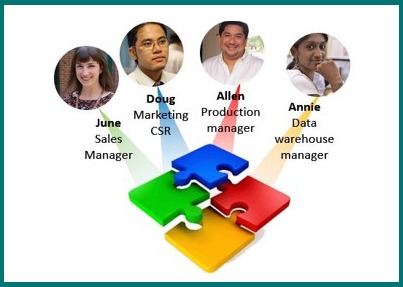
We tend to design systems and websites with a one-size-fits-all interface, where the priority and placement of various information is determined by designers. Most people do not think like web-designers. They have different priorities and interests, based on what they do. We should let users configure their own interface around the items they want to…
-
User-Centered Vs. Human-Centered Design

In the last few years, the terms human-centered and user-centered have become synonymous in HCI, with a focus on disciplines such as “user experience” and “interaction design.” Here I will argue that neither discipline really deals with the core issues of human-centered design.
-
Improvising Design

Why is design improvisational? We talk about design as if it were fixed: as if there were one best way to design everything. We celebrate designers who produce especially elegant or usable artifacts as if they were possessed of supernatural powers. Yet design should be easy. It is the application of “best practice” principles to a
-
Design Methods as Performative Objects

Brown and Duguid’s (2001) concept of a “network of practice” has been niggling away at my consciousness. The idea is that a collection of people are enabled to understand each others’ work because of commonalities in practice, but not to the extent that a Community of Practice creates shared ways of framing and performing work:
-
Responsive Web Design
I manage the website for an Animal Rescue shelter. I have been struggling with the design of the site for some time now, as I have some users who are still using IE6 under windows XP (on an SVGA screen), some who want to view the site on their mobile phones, and some who have
-
Using Actor-Network Theory
A recent emphasis on sociomateriality appears to have entered the IS literature because of discussions by Orlikowski (2010) and the excellent empirical study of Volkoff et al. (2007). Now that people have been sensitized to the literature on material practice, actor-network theory is classified as “tired and uninformative” [1]. Which leads me to wonder just
-
Social Media Platforms For Online Learning

Recently, I have been using a new social media platform to run one of my classes. The idea was, that as we are studying social informatics, we could study the effect of using social media on our own workflows first hand. I also thought that – in these days of daily Facebook and Twitter use
-
Organizational Coordination

I have been working for a while on comparing the results from some very complex research studies of collaborative design in groups that span disciplines or knowledge domains. I was stunned to realize that I had different types of group activity depending on the sort of organization. By “organization,” I mean the way in which
-
The Potential of Interaction Design

While browsing and working on a recent paper, I mused on the missed opportunity of interaction design. Reading Terry Winograd’s (1997) From Computing Machinery to Interaction Design, I was stunned to see how visionary this was, in the context of contemporary HCI thinking which focused on interactions with computer screen interfaces (still, sadly, the main